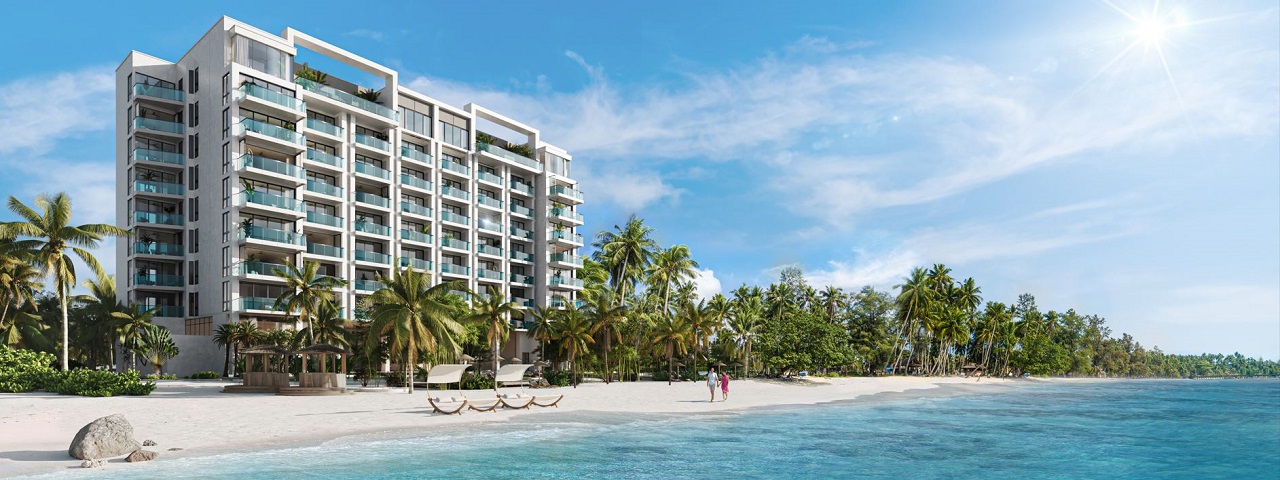
Sri Lanka’s New Digital Nomad Visa

Sri Lanka’s New Digital Nomad Visa: Your Guide to Working from Paradise

For years, Sri Lanka has been a “bucket list” destination for travelers seeking golden beaches, ancient temples, and world-class surf. But for digital nomads, the challenge was always the logistics of short-term tourist visas and constant “border runs.” That has officially changed. With the launch of the Sri Lanka Digital Nomad Visa, the island is now one of the most attractive hubs in Asia for remote professionals.

Whether you’re a freelancer, a remote employee, or an online business owner, here is everything you need to know about making the “Pearl of the Indian Ocean” your next home office.


The Basics: What is the Digital Nomad Visa?

The Sri Lanka Digital Nomad Visa (DNV) is a residence visa designed specifically for foreign nationals who work for companies or clients based outside of Sri Lanka.

The Key Stats:

  • Validity: 1 year (renewable annually).

  • Cost: USD $500 for the main applicant (and $500 per dependent).

  • Processing Time: Approximately 2–4 weeks.

  • Income Requirement: Minimum USD $2,000 per month.

This visa grants you the legal right to live on the island while maintaining your international career. It bridges the gap between being a tourist and a resident, allowing you to open bank accounts, sign long-term leases, and even enroll children in international schools.


Who Qualifies?

The visa is open to anyone over 18 who can prove they earn their living from foreign sources. This includes:

  1. Remote Employees: Working for a company registered outside Sri Lanka.

  2. Freelancers: Serving an international client base.

  3. Business Owners: Running a company with no local registration or local trading.

Financial Thresholds:

To qualify, the main applicant must demonstrate a monthly income of at least $2,000. If you are bringing more than two dependents, you must show an additional $500 per month per extra dependent.


The Application Process: Step-by-Step

The Department of Immigration & Emigration has streamlined the process, but it requires thorough documentation.

  1. Gather Your Dossier: You’ll need a valid passport (6 months+), passport photos, and proof of income.

  2. Clearances: Uniquely, Sri Lanka requires a Medical Clearance Report and a Police Clearance Certificate from your home country (issued within the last three months).

  3. Insurance: You must hold international health insurance that covers you specifically in Sri Lanka for the duration of your stay.

  4. Submission: The application is submitted to the Residence Visa Division. Once approved, the visa is endorsed directly in your passport.


Why Choose Sri Lanka?

Beyond the legal ease, the lifestyle “ROI” in Sri Lanka is immense.

  • Cost of Living: While your income must be in USD, your expenses will be in Sri Lankan Rupees (LKR). With a monthly salary of $2,000, you can live a high-end lifestyle. A modern 1-bedroom apartment in Colombo costs roughly $300–$400, leaving plenty of room for exploring.

  • The Hubs: * Colombo: Best for those who need high-speed fiber internet, rooftop bars, and networking.

    • Galle/Talpe: Perfect for a “work-from-the-beach” vibe. The UNESCO-listed Galle Fort is a haven for boutique cafés and creative nomads.

    • Kandy: For those who prefer misty mountains and a cooler climate for deep-focus work.

  • Infrastructure: While the country has faced challenges, the digital infrastructure in nomad hubs is surprisingly resilient, with a growing number of co-working spaces and high-speed Wi-Fi becoming the standard in villas and apartments.


A Turnkey Investment Opportunity

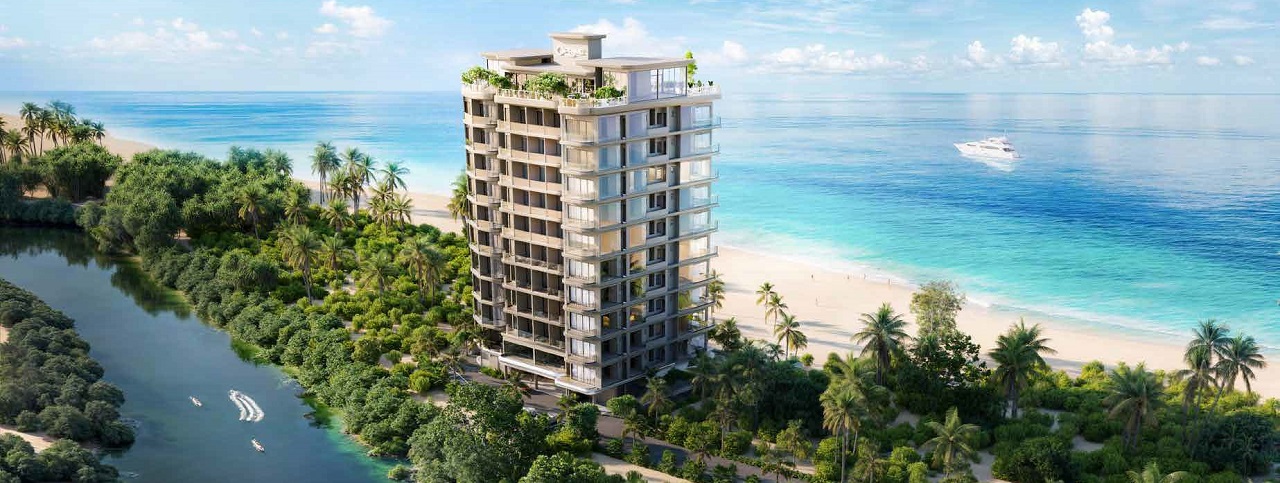
For many nomads, a one-year stay often turns into a long-term love affair with the island. This is where the Talpe Heights model becomes relevant. By staying on a Digital Nomad Visa, you can experience the island as a resident first, assessing the 8–11% rental yields and capital appreciation potential before committing to an investment.

With the operator All-Suite Resorts managing properties, nomads can eventually transition from “renters” to “owners,” securing a secondary income stream while they continue their global travels.

Final Verdict

If you are looking for a base that offers a lower cost of living, a tropical climate, and a legitimate legal framework to work remotely, Sri Lanka’s Digital Nomad Visa is a game-changer. It’s time to trade the gray skies for Indian Ocean sunsets.

Ready to apply? Ensure your paperwork is in order and prepare for a year of adventure.

IMF predicts 5% GDP growth & other investment factors

Unlike in other countries where foreign nationals are generally confined to leasehold properties for a maximum of 99 years, Sri Lanka offers a distinctive benefit by allowing them to acquire condominium properties as freehold properties.

With its diverse geographical landscape, Sri Lanka is an attractive destination for real estate investment.

The country offers stable and enjoyable weather, an affordable cost of living, and the welcoming nature of its amiable people, along with reliable air transportation, making it an ideal location for living and holidays.

Investment highlights:

The IMF predicts the Sri Lankan economy will be growing by 5% in 2027.

The Port City special enterprise zone www.portcitycolombo.lk will have significant impact on the economy becoming the leading residential, retail, and business hub in South Asia.

Sri Lanka Tourism Development Authority (SLTDA): prior to 2019, the Southern Coast around Galle maintained a steady hotel occupancy rate of over 70%.

Buyers are more inclined to invest in units affiliated with reputable brands like Kristall Spaces, as they offer superior build quality, services and potential rental income, thus facilitating the sale of the units.

Beachfront real estate prices have risen by over 80% in some prime beachfront locations over the past 5 years.

In the next 5 years, we expect an apartment costing USD285,755 to increase in value to 460,211 based on 10% capital growth per annum – that is USD174,456 increase or over 60% in 5 years.

Maintenance services charges may vary from $0.15 to $0.25 per square foot but USD 115 per month for a 1-bedroom unit can be expected in prime locations.

According to the latest report from Forbes magazine, Sri Lanka has been identified as the fourth top choice for solo travelers in 2024, overtaking countries such as Jordan, Thailand, and Indonesia.

Despite enduring significant setbacks during the Covid pandemic of 2020 and 2021, as well as political unrest and economic challenges in 2022, Sri Lanka’s tourism sector has demonstrated remarkable resilience, experiencing a swift resurgence.

Strategic importance of Sri Lanka: the Indian Ocean serves as a maritime trading corridor and is a significant source of maritime economic resources with nearly two thirds of the world’s oil being transported through here.

Consequently, the area has become crucial for the energy, food and national security of many nations making Sri Lanka’s location important.

As interest rates fall, more investors will explore alternative investment avenues, with a particular focus on real estate and this will drive up the demand for luxury properties in the near future.

Sri Lanka: new Investor Visa for property buyers

This new initiative for buyers outside Sri Lanka interested in buying condominium units (holiday apartments) started on 1 June 2024.

The Investor Visa program ensures a simplified and efficient procedure for non-Sri Lankans looking to invest in the country’s fast-growing real estate market allowing visa applications to be handled entirely online, making it easier for potential investors.

A notable feature of the new process is that foreigners staying in Sri Lanka will no longer have to exit the country to apply for a visa.

This notable improvement is expected to draw in additional investors to support Sri Lanka’s economic progress and flourishing construction and property development industry.

Applicants must provide:

1. Confirmation from a bank regarding the deposit of foreign currency into an IIA account.

2. A statement from the investor specifying the purpose of the investment, whether to purchase a unit or units from a condominium development project in the country.

For investments exceeding USD 100,000, applicants will receive an immediate 5-year visa, which can be renewed.

Investments over USD 200,000 will be eligible for a 10-year renewable visa, both necessitating a maximum of five days for ministerial approval.

By opening its doors wider to international investors, Sri Lanka is not only improving its economic prospects but also laying the foundation for sustainable growth in its property development sector.

In addition to the direct and obvious benefits mentioned earlier, foreign investments in real estate have been proven to generate multiple streams of both short and long-term inflows.

The nature of investing in Real Estate is characterized by long-term commitments and substantial investments, which in turn contribute to the country’s overall development.

Half a million tourist arrivals in 3 months

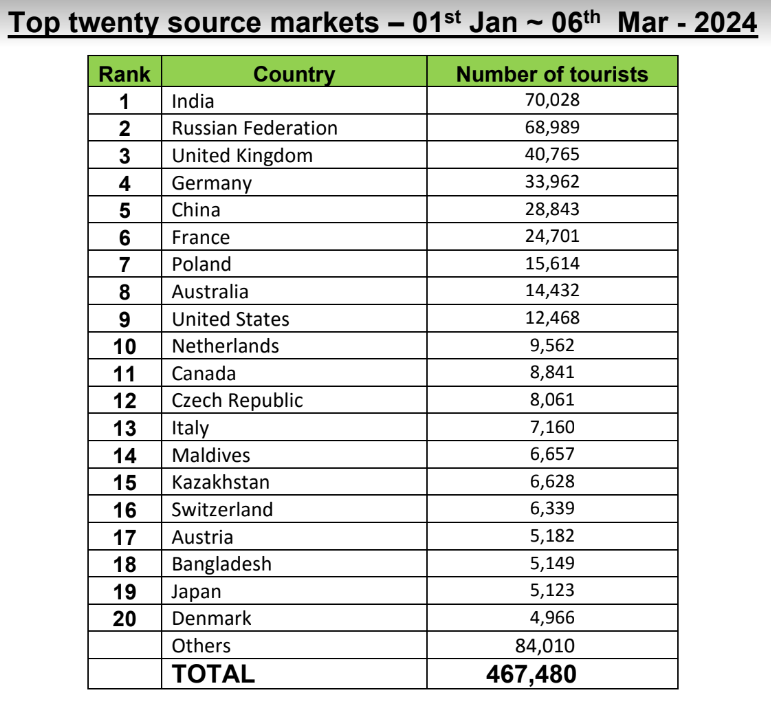
Sri Lanka passed 500,000 tourist arrivals in just the third month of 2024, with over 100,000 tourists coming in March alone confirming hat the industry is making excellent headway towards strong growth.

Since the COVID pandemic began, this is the first time the island nation has reached over half a million visitors in just two and a half months – last year, Sri Lanka reached this milestone in the second week of May.

The provisional data released by the Sri Lanka Tourism Development Authority showed that for the first 14 days of March, Sri Lanka welcomed 91,205 international visitors.

Sri Lanka Tourist Arrivals 6 March 2024

The cumulative number of tourist arrivals from January 1st to March 14th reached 517,808.

If the current level of tourist arrivals continues, Sri Lanka could reach 200,000 arrivals for the third month in a row – a first for the country since the start of the Covid pandemic.

The Russian Federation is the biggest contributor to tourism in March, with 15% of all tourist arrivals (13.699) and ranking second India accounted for around 15% too with 13,492 visitors.

Germany, the United Kingdom, France, and China are also significant source markets.

During the initial two months of the year, the tourism industry generated a total revenue of US $ 687.5 million and this represents a 118.2% increase year on year.

Consent Preferences